XVI SDDN Meeting 2024
November 13 - 15, 2024
Fundación Valenciana de Investigación Biomédica (Centro de Investigación Príncipe Felipe)
Valencia, Spain
This international conference has become an ideal networking forum for the community immersed in early drug discovery, including Academia and Industry. Each year, we select a limited number of topics with the idea of facilitating an in-depth discussion between professionals from different areas and with different training, but all focused on advancing on the front lines of drug discovery and research in translational medicine.
As a trusted partner in the Spanish Pharma & Biotech community and as Protector Member of the Network, our goals are to help accelerate your research, provide scientist to scientist support, and consistently produce innovative solutions.
Visit our booth!
New Technology
Fast, No-Wash Lumit® Immunoassays
Quantify proteins or small molecules without tedious wash steps! Our homogenous Lumit® Immunoassays are sensitive, have broad dynamic range and can be completed in 70 minutes or less. They provide a simple and fast alternative to conventional immunoassays.
Explore our Lumit® Immunoassays for cytokine detection, kinase pathway analysis and FcRn binding. Or contact our Tailored R&D Solutions team to develop your own Lumit® application!
Learn how Lumit® technology can help you get results faster in this free webinar.

Key Products
What are you interested in? Explore new products in these fields:
Kinase Biology
Bioluminescent assays can help determine the ability of compounds to bind or inhibit kinases in biochemical and cellular formats, and are amenable to high-throughput or selectivity profiling. Our new NanoBRET™ Target Engagement Assays enable you to quantify live-cell target engagement to quantitate compound affinity and residence time, and calculate cellular compound permeability. Explore options to access the Target Engagement Assay and profiling services.
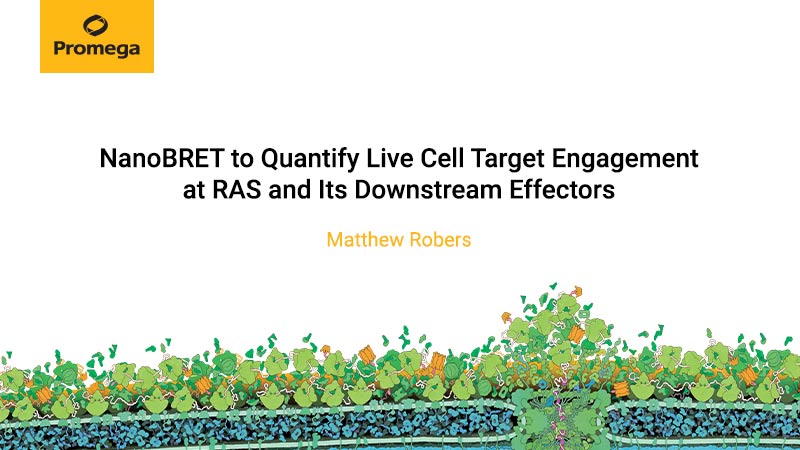
View this 26-minute presentation describing the use of NanoBRET to quantify live-cell target engagement at RAS and downstream effectors.
RAS Signaling Pathways
RAS is the most frequently mutated oncogene in human cancers, and KRAS is the most frequently mutated subtype of the RAS family. Discover assays and technologies to probe RAS and KRAS biology, including target engagement, protein:protein interactions, protein levels and activation of ERK.
Targeted Protein Degradation
Selectively targeting proteins for removal from the cell is an exciting new modality for oncology therapeutics. New CRISPR-edited reporter cell lines facilitate studying protein degradation targets using sensitive bioluminescent technology.
Study protein degradation in real time using CRISPR knock-in cell lines. Read the White Paper.
In Vivo Imaging Substrate
In Vivo Imaging with NanoLuc® provides high sensitivity and low background when imaged in superficial tissues and has been used successfully in deeper tissues. Our new NanoLuc® substrate optimized for in vivo imaging is available now as Early Access materials. NanoLuc® and firefly luciferases can be used together for dual luciferase molecular imaging studies in CAR-T cell therapy and other oncology treatment studies.
Cell Imaging with Janelia® Fluor HaloTag® Ligands
The newest Janelia® Fluor HaloTag® ligands support super-resolution microscopy, high-resolution imaging and more applications. Enhanced photostability and completion of the visible spectrum make this a complete portfolio for use in endogenous cellular settings.
Immunogenic Cell Death
Immunogenic Cell Death in response to oncolytic viruses, combination therapeutics and other treatments is a specialized form of cell death that results in activation of the innate and adaptive immune systems to help destroy cancer cells. It’s now possible to measure two orthogonal markers of immunogenic cell death:
1. HMGB1 release with the homogeneous no-wash Lumit® HMGB1 Immunoassay.
2. Kinetic release of extracellular ATP with our new RealTime-Glo™ Extracellular ATP Assay. View the video to see how easy it can be to measure extracellular ATP in real-time.

Inflammasome Activation
Want to assess inflammasome activation and inhibition with live cells? Learn about our new homogeneous, no-wash Lumit® IL-1β Immunoassay, Caspase-Glo® 1 Inflammasome Assay and live-cell NLRP3 Target Engagement Assay. Email us to learn more about the target engagement assay.3D Culture
Get more physiologically relevant data out of your 3D culture samples with optimized assays for viability, cytotoxicity, apoptosis, and energy metabolism. The new Caspase-Glo® 3/7 3D Assay measures caspase-3 and-7 activities in apoptotic 3D cultures using a simple add-mix-measure protocol.
Bioassays for Biologics
Our functional bioassays can interrogate immune checkpoint modulation, T cell retargeting, cytokine and growth factor signaling, tumor antigen-specific cell killing, and Fc effector activity.
The new PBMC ADCC Assay provides a simple, add-mix-read format with ADCC-qualified human PBMCs, a choice of target cells expressing HiBiT fusion protein and corresponding PBMC ADCC Bioassay Kit. Learn how the assay works in this video.
T cell receptor-engineered T cell (TCR-T) and chimeric antigen receptor T cell (CAR-T) therapy are two types of adoptive T cell immunotherapy for cancer treatment. The T Cell Activation Bioassay (TCRαβ-KO) is a bioluminescent cell-based assay for measuring the potency of transgenic TCR constructs to activate T cells.

Circulating Cell-Free DNA (ccfDNA)
The quantity and sequences of ccfDNA molecules found in plasma can indicate the presence of a tumor and offer valuable insights into its characteristics. You can automate ccfDNA extraction from plasma with the new Maxwell® RSC ccfDNA Plasma Kit or high-throughput Maxwell® HT ccfDNA Kit.
Register for the 3-Part ccfDNA Webinar Series to learn more about the use of ccfDNA in oncology research and techniques to maximize results.
Nucleic Acid Extraction
Our easy-to-use nucleic acid purification reagents cover a full range of sample throughput needs—from manual solutions through benchtop automation to plate-based systems for high-throughput processing. Learn about automated DNA and RNA extraction from FFPE tumor samples, and miRNA purification from tissue, plasma or serum.
Custom Solutions
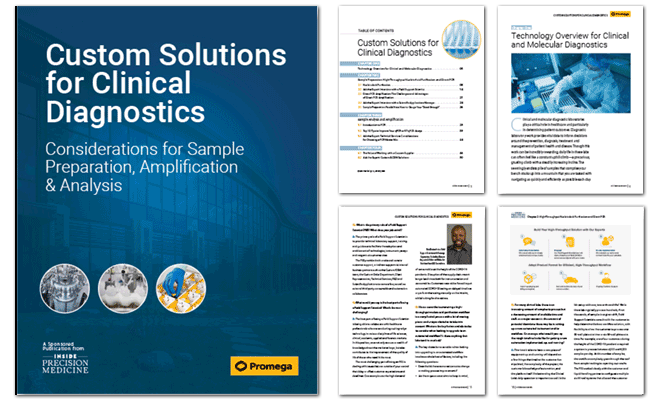
Looking for a quick techniques refresher or a way to support your mentee? Our Custom Solutions for Clinical Diagnostics eBook is packed with helpful tips, tricks, and guidance designed to address sample preparation, amplification, and analysis challenges in the lab.
Clinical Research
We believe in science-driven solutions and personalized service for scientists working with any type of cancer research. Explore our collection of molecular oncology resources, or chat with a scientist to work through your specific needs.
Microsatellite Instability
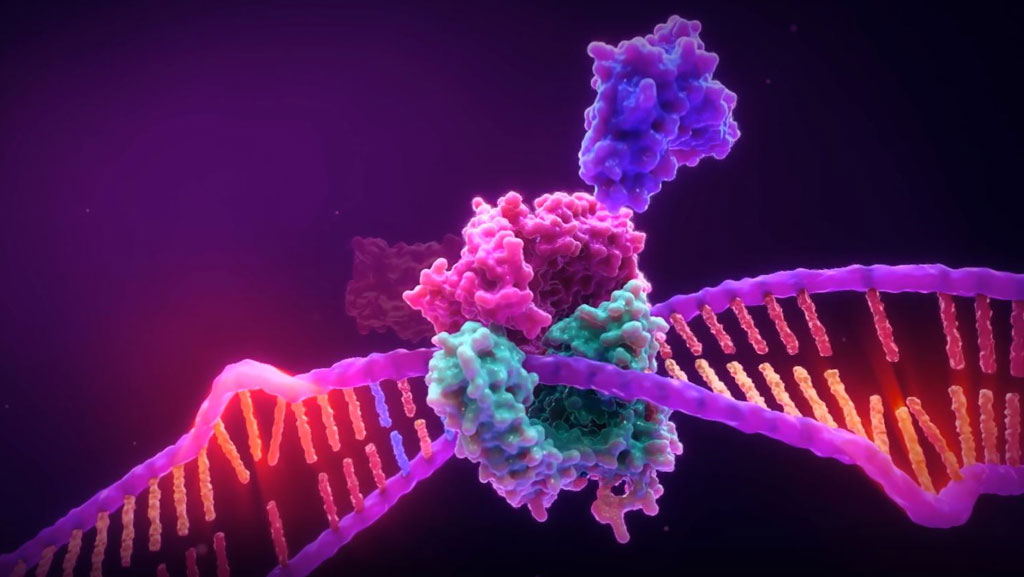
Our MSI PCR-based technology has been used extensively in clinical research for more than 15 years and is supported by over 225 peer-reviewed publications. We currently offer several MSI solutions, both for research and diagnostic use, including:
- OncoMate® MSI Dx Analysis System IVD (U.S. & Europe Only) – Intended for diagnostic use, leverages gold standard loci
- LMR MSI Analysis System (Global) – Novel long mononucleotide panel to improve clarity in challenging samples
- MSI Analysis System, v1.2 (Global) – Gold standard loci, supported by over 140 peer-reviewed publications
What is Microsatellite Instability (MSI)?
Instruments
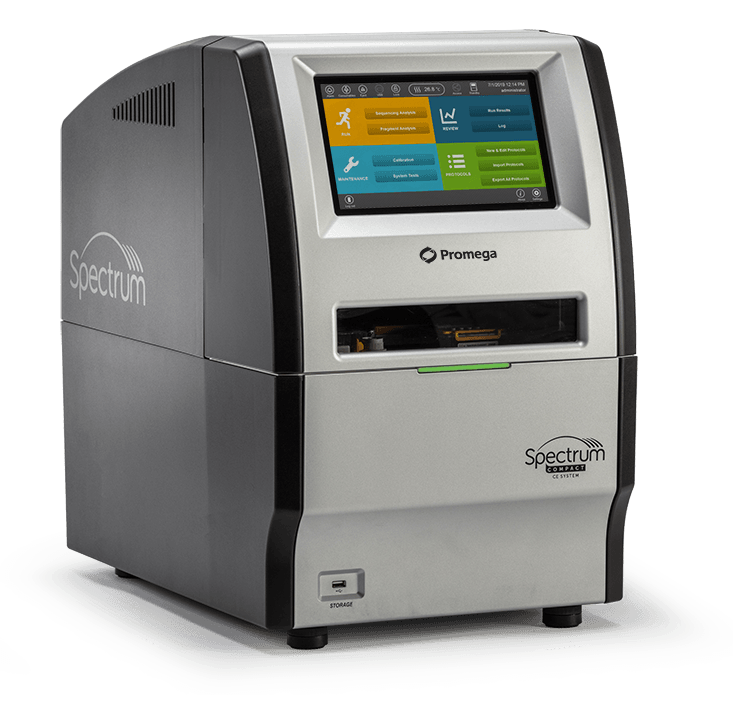
New CE System for Fragment Analysis and Sanger Sequencing
The Spectrum Compact CE System is a Sanger sequencing instrument used in oncology research applications for molecular profiling of cancers. It can be used to detect and verify the presence of mutant alleles in tumor tissue.
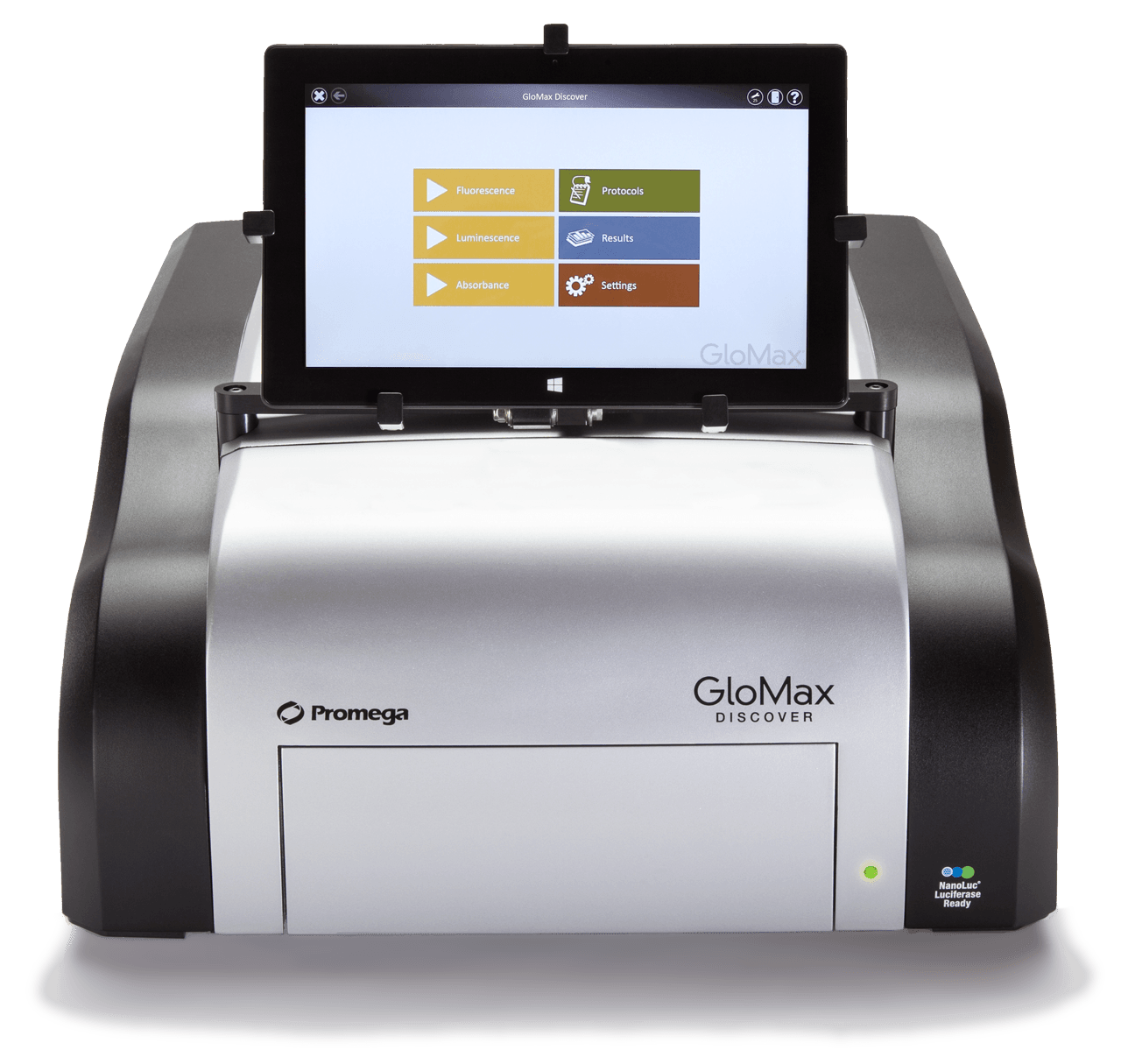
High-Performance Microplate Reader
GloMax® plate readers have high sensitivity and wide dynamic range, so you can accurately detect high and low signals on the same plate. Easily detect luminescence, fluorescence, absorbance, BRET and FRET with the touch of a button!

Benchtop Automated Nucleic Acid Purification
Maxwell® Instruments are compact, automated nucleic acid purification platforms that process up to 48 samples simultaneously. Get high-quality nucleic acid purification with minimal steps and less hands-on time!
Posters
All scientific posters will be available for download during the event.
A Novel Bioluminescent Bioassays Platform for the Discovery and Development of Engineered T Cell Therapies for Cancer
Authors: Jamison Grailer, Michael Slater, Jim Hartnett, Frank Fan, and Mei Cong
Luminescent Immunoassays for Homogeneous Determination of Cell Proliferation and Senescence
Authors: Dan F. Lazar, Kevin R. Kupcho, Andrew L. Niles, Matthew Swiatnicki, and James J. Cali
Liquid Biopsies: Circulating Nucleic Acids and Circulating Tumor Cells 2
Authors: Monica Yue and Rachel Eloranta
Partnered with Stilla Technologies, Inc.
Novel cell-based bioassays for mono- and multi-specific antibodies targeting PD-1/PD-L1 for combination immunotherapy
Authors: Jun Wang, Julia Gilden, Denise Garvin, Pete Stecha, Jim Hartnett, Frank Fan, Mei Cong and Jamison Grailer
NanoBiT Technologies for CAR-T Characterization and Potency Testing
Authors: Julia K. Gilden, Pete Stecha, Aileen Paguio, Jim Hartnett, Brock Binkowski, Dan Lazar, Frank Fan, Mei Cong
Rapid and Efficient Sample Preparations for Cell Free DNA
Authors: Zhiyang Zeng, Andrew Taft, Kasen Riemersma, Spencer Hermanson, Jim Cali, Poncho Meisenheimer, Wenhui Zhou
T Cell Metabolic Profiling with Bioluminescent Assays
Authors: Maggie Bach, Natasha Karassina, Donna Leippe, Mike Valley, Kayla Sylvester, Jim Cali, Jolanta Vidugiriene
Novel Bioluminescence Approaches for Measuring Fatty Acid β-Oxidation and Production of Reactive Oxygen and Nitrogen Authors: Kim Haupt, Matt Larsen, Hui Wang, Natasha Karassina, Mike Valley, Wenhui Zhou, Jolanta Vidugiriene
Download the PDFDevelopment of an Oxygen Consumption Rate Assay for a Standard Plate Reader
Authors: Ian Marozas, Zhiyang Zeng, Mike Valley, Tony Lauer, Jolanta Vidugiriene , Jim Cali , Wenhui Zhou
Analysis of Diverse Metabolic Pathways Using Bioluminescent Cell-Based Assays
Authors: Donna Leippe, Natasha Karassina, Kayla Sylvester, Mike Valley and Jolanta Vidugiriene
MoA-Based Potency Bioassays for Immunotherapy Programs Targeting the TIGIT/CD112R/CD96 Axis
Authors: Jamison Grailer, Denise Garvin, Jim Hartnett, Kai Hillman, Frank Fan, Mei Cong, and Zhi-Jie Jey Cheng
Cell-based luminescent reporter bioassays for immunotherapies targeting macrophage effector functions
Authors: Jonathan Mitchell, Julia Gilden, Christie Munn, Kirk Twaroski, Jim Hartnett, Pete Stecha, Gopal Krishnan, Frank Fan, Mei Cong, and Jamison Grailer